Lynnwood sits in Snohomish County where winter storms bring sustained winds over 40 mph and heavy rain that drives water under lifted shingles on the many 1970s and 1980s tract homes. Storm damage often shows first at valleys, ridge vents, and around skylights where older flashing has corroded. A quick visual check from the ground misses the underlayment tears that let water reach the decking weeks later.
We start every job by walking the attic to find daylight or wet insulation before opening the roof. Asphalt composition shingles common here delaminate when wind gets under the tabs, and once the seal is broken the next rain event pushes water sideways under the course above. We replace damaged sections with matching material rather than patching so the roof maintains its original wind rating.
Homeowners in the Alderwood Manor and Lake Stickney neighborhoods frequently discover that storm repairs must also address code requirements for ice-and-water shield along eaves when we already have the roof open. Skipping this step leaves the home exposed during the next freeze-thaw cycle typical of the area.
After repair we photograph every replaced shingle and flashing detail so the homeowner has a record for insurance. Work is scheduled around the forecast so new underlayment never sits exposed overnight in our wet climate.
Technician insight
In Lynnwood the thing that catches most people out with storm damage roof repair is how wind-driven rain finds its way under the old step flashing on 1970s split-levels in the Highway 99 corridor; once water reaches the wall cavities it shows up as stains two stories down, long after the roof itself looks fine from the street.
Wind-lifted shingles near Lake Stickney
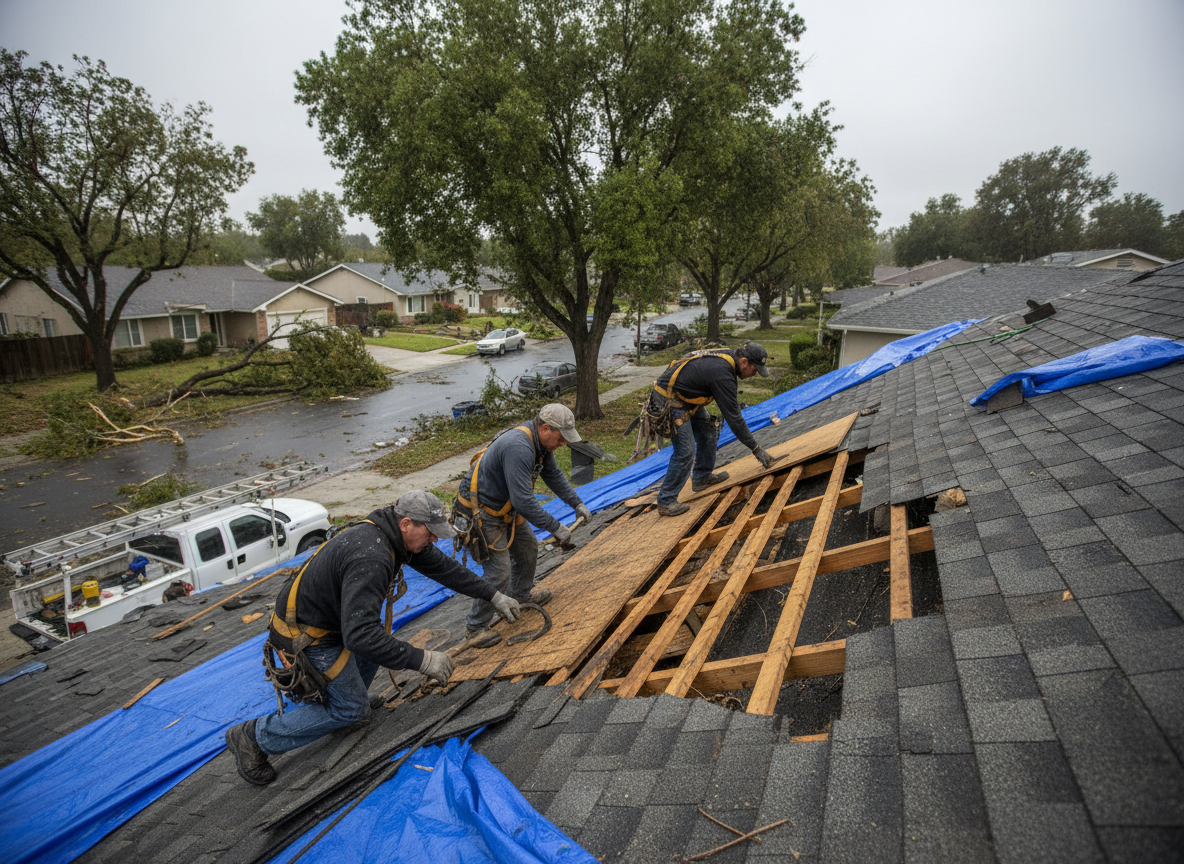
A December storm peeled back shingles on a 1982 ranch home. We found the underlayment torn along two valleys and water already in the insulation. We replaced the affected sections, added new ice-and-water shield, and restored the roof before the next front moved in.
How it works
- 1
On-site assessment
We inspect both the exterior roof and attic to locate all entry points created by wind or falling debris.
- 2
Documentation for insurance
Photos and written notes capture the extent of damage before any work begins.
- 3
Targeted repair
Damaged sections are removed to sound decking, new underlayment and matching shingles are installed, and flashing is renewed.
- 4
Final walkthrough
We review the completed work with the homeowner and provide a packet of photos for their records.
Pricing
Cost depends on roof pitch, number of damaged areas, and whether decking replacement is needed; we provide an upfront quote after inspection.