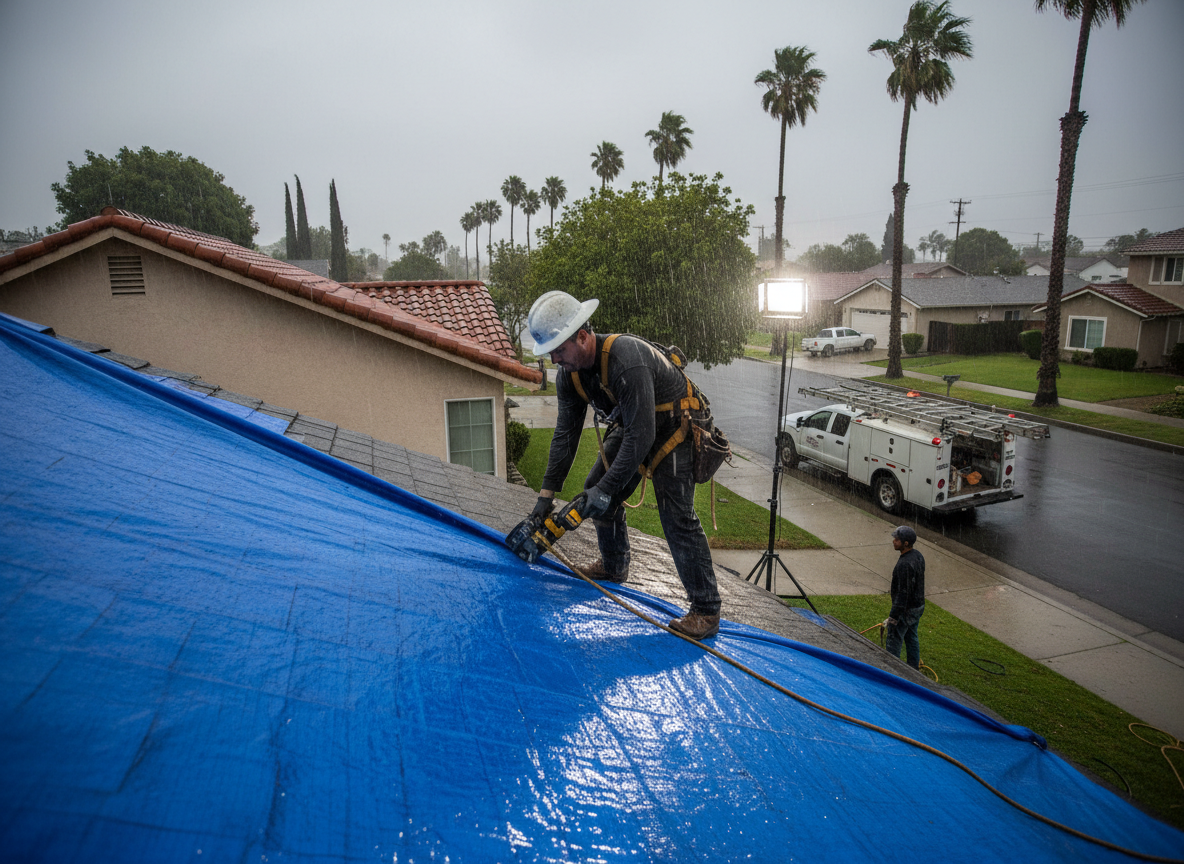
Lynnwood sits in Snohomish County where heavy Pacific Northwest rains and sudden wind gusts from Puget Sound storms frequently expose roof weaknesses. Older single-story homes built in the 1970s and 1980s along Highway 99 and near Alderwood Mall often have aging asphalt shingles or cedar shakes that split under prolonged moisture. When a leak appears during a downpour, water travels fast along underlayment seams and into attics before homeowners notice ceiling stains. Emergency calls require immediate tarping to stop interior damage while crews assess whether a full section replacement or temporary patch will hold until drier weather.
Terrain in the area includes gentle slopes and some low-lying lots near Swamp Creek that hold standing water after storms, increasing the chance of ice dam formation even in milder winters. Emergency roofing work here means checking flashing around skylights and chimneys first, because those are the most common entry points on split-level homes common in the 98036 zip code. Crews carry reinforced tarps and portable lighting because many service calls happen after dark during winter months when daylight ends by 4:30 p.m. Proper documentation of existing damage before any repair protects both the homeowner and the contractor when insurance adjusters arrive later.
Local building practices in Lynnwood require permits for any roof work exceeding 100 square feet, so emergency crews must know which temporary fixes can stay in place without triggering immediate inspection. Wind-driven rain often forces water under ridge vents on homes near the Interurban Trail corridor, a detail that only shows up once interior moisture tests are performed. Quick response from the shop at 19832 Hwy 99 lets teams reach most neighborhoods within thirty minutes, reducing secondary water damage to insulation and drywall that becomes costly once mold sets in.
Homeowners sometimes attempt their own roof patches with sealant tubes from big-box stores, but these rarely survive another heavy rain event common to the region. Professional emergency service includes removing debris, drying wet sheathing where accessible, and installing code-compliant underlayment patches that integrate with the existing roof system. This approach prevents repeat leaks that would otherwise require multiple callbacks during the wet season.
Technician insight
In Lynnwood the thing that catches most people out with emergency roofing service is how fast water moves under the underlayment on 1980s split-levels near Swamp Creek once the rain starts blowing sideways. Homeowners often focus on the visible ceiling spot and miss that the actual breach is twenty feet uphill on the roof plane.
Wind-driven leak during November storm
A homeowner in the Alderwood neighborhood called after water appeared above a bedroom window during a heavy rain. We found the ridge vent had lifted on the north slope, allowing water to travel under the shingles and into the attic. The crew installed a reinforced tarp the same evening and returned two days later to replace the damaged ridge section once winds calmed.
How it works
- 1
Initial Call and Dispatch
Answer the 24/7 line, gather details about the leak location and weather conditions, then send the nearest crew from the Lynnwood shop.
- 2
On-Site Safety Assessment
Evaluate roof access, active leaks, and structural concerns before any work begins on the wet surface.
- 3
Temporary Protection
Install reinforced tarps, seal visible openings, and divert water away from living spaces to stop further interior damage.
- 4
Permanent Repair Plan
Document existing conditions, provide options for section replacement or full repair, and schedule follow-up once weather allows.
Pricing
Emergency roofing begins with an assessment fee that covers the initial visit; final repair costs depend on roof access, extent of damage, and materials required.