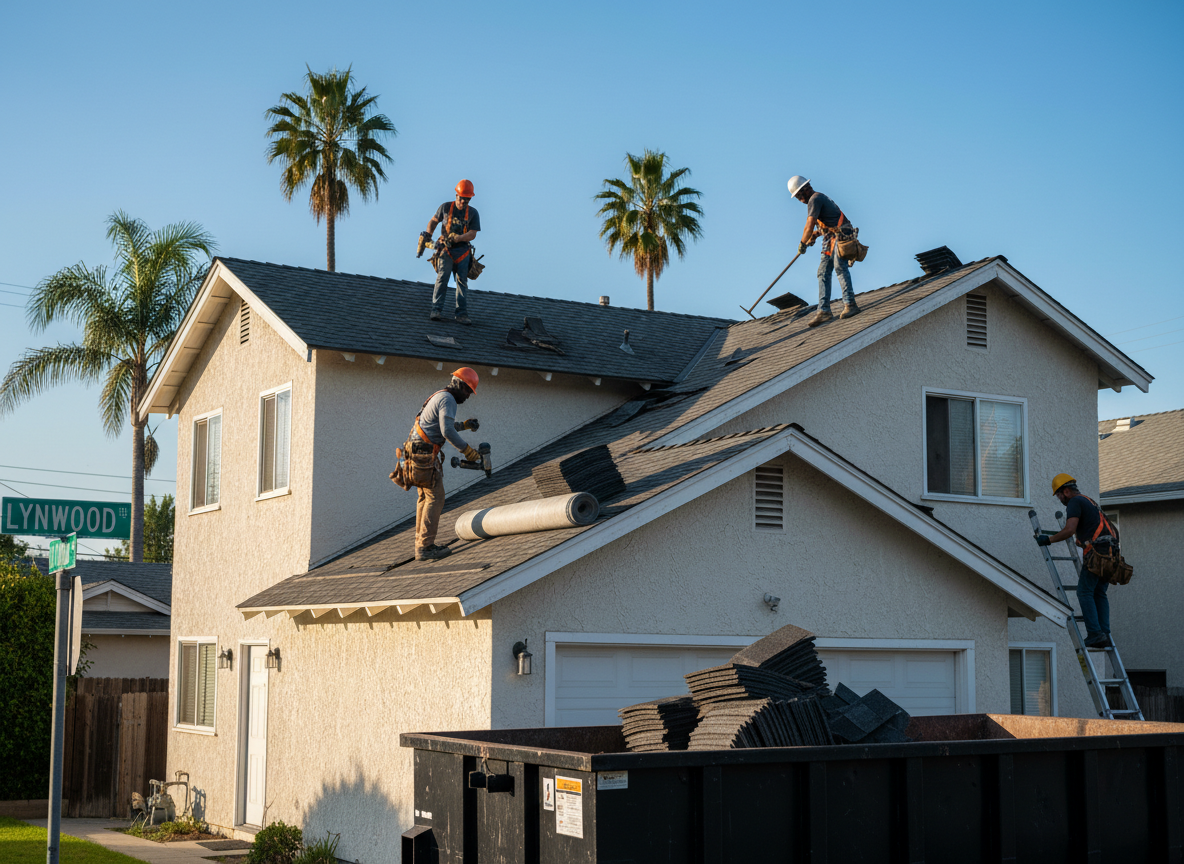
Roof replacement in Lynwood starts with a full tear-off rather than layering because most homes built between the 1960s and 1980s already carry two or three layers of asphalt shingles. Adding another layer traps moisture against the deck, especially during the long wet season when roofs stay damp for weeks. We inspect every sheet of plywood or OSB for rot caused by previous leaks around plumbing vents and skylights common in split-level houses near Alderwood Mall.
Wind-driven rain from the southwest hits the north-facing slopes hardest in neighborhoods like Lake Stickney and Martha Lake. We install ice-and-water shield along all eaves plus upgraded synthetic underlayment across the entire deck instead of felt. Ridge vents are added only after confirming attic insulation levels so we do not pull warm air out of living spaces during winter.
Flashing details around chimneys and step flashing at sidewalls receive extra attention because many Lynwood properties sit on slight slopes that direct water toward the house. We match new composition shingles to existing color where possible but recommend architectural shingles for better wind resistance when the home is exposed along 44th Avenue or near the I-5 corridor.
Permits are pulled through the City of Lynnwood Building Division before work begins. Tear-off debris is hauled the same day to keep driveways clear, and final walkthrough includes checking every nail and ridge cap for proper seating.
Technician insight
In Lynwood the thing that catches most people out with roof replacement is hidden deck rot along the north eaves of 1970s split-level homes near Highway 99. Constant light rain soaks under old felt and never dries out, so what looks like a simple shingle swap turns into multiple sheets of plywood once we start tearing off.
North-facing slope leak on 44th Avenue
Homeowner reported water stains in an upstairs bedroom after a November storm. We found two layers of 20-year-old shingles with failed underlayment and rotted OSB along the eave. After full tear-off we replaced four sheets of decking, added ice-and-water shield, and installed architectural shingles. No further leaks occurred the following winter.
How it works
- 1
Site Assessment
We walk the roof and attic, note existing layers, deck condition, and any moss or soft spots typical after years of Snohomish County rain.
- 2
Material Selection
Homeowner chooses shingle style and color; we confirm wind rating and underlayment requirements for the exposure at that address.
- 3
Tear-Off and Deck Repair
Old roofing is removed completely, rotted plywood is replaced, and drip edge is installed before underlayment goes down.
- 4
Installation and Final Inspection
New shingles are laid, flashing is renewed, and the job is checked for proper nailing and ventilation before cleanup.
Pricing
Upfront written quotes provided after roof inspection; final price depends on layers removed, deck repairs, and chosen materials.