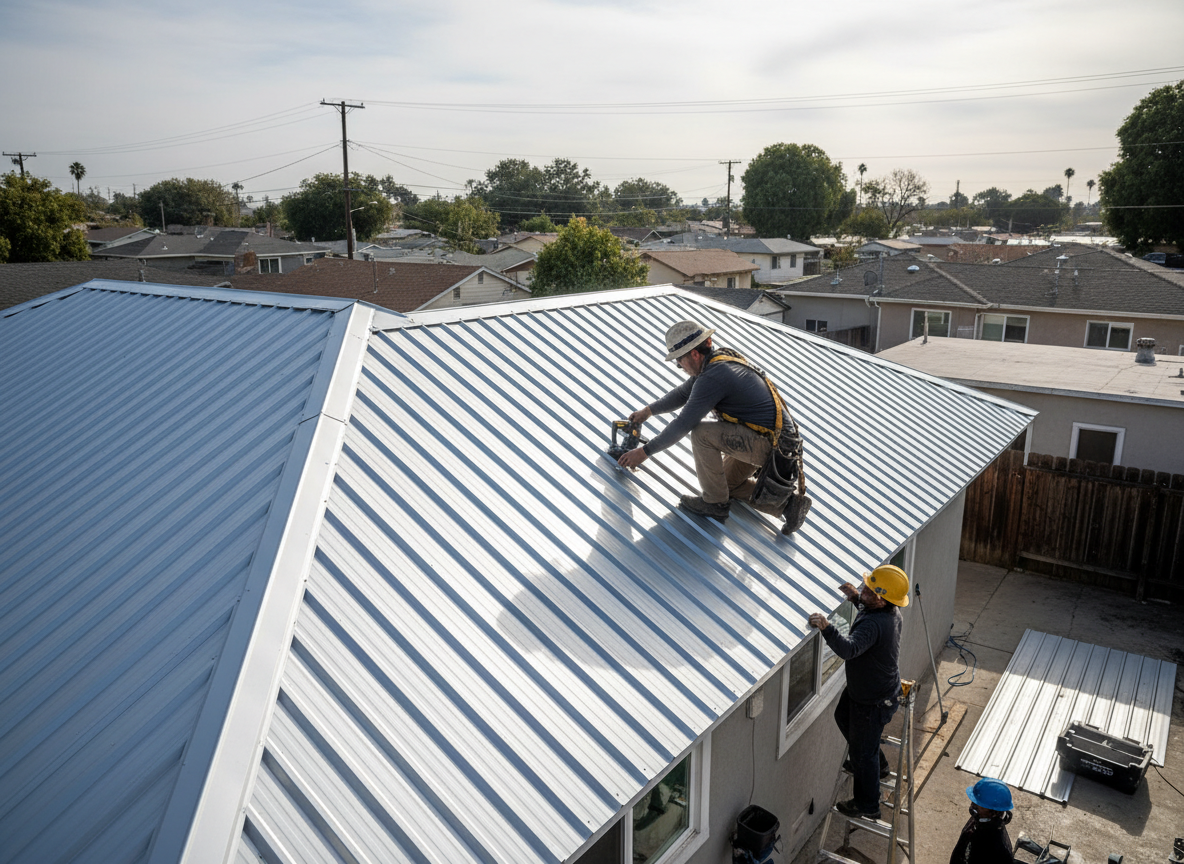
Steel roofing performs well in Lynwood because it sheds heavy Pacific Northwest rain quickly when installed with proper standing-seam profiles and concealed fasteners. Homes built in the 1960s through 1980s along 44th Avenue West and near the Alderwood Mall often have aging composition shingles or cedar shakes that require complete tear-off before steel panels go down. Without that step, trapped moisture leads to rust on the underside of the new metal within a few seasons.
Contractors must account for wind-driven rain common along the Highway 99 corridor and the occasional snow load that settles on north-facing slopes. Edge details around skylights, plumbing vents, and masonry chimneys need extended flashing and butyl tape to stop water from creeping under the panels during prolonged winter storms. Skipping these steps is the most frequent cause of callbacks in Snohomish County steel roofs.
Gauge selection matters on single-story ramblers versus two-story homes near Martha Lake. Thicker 24-gauge material resists denting from falling branches in the tree-heavy neighborhoods east of I-5, while 26-gauge works on protected structures when budget is tight. All installations require ventilation adjustments so attic moisture does not condense on the steel underside during the long damp months.
Technician insight
In Lynwood the thing that catches most people out with steel roofing contractors is the constant light rain that soaks into older cedar shake homes along 44th Avenue West; if crews skip the full tear-off and just lay steel over the shakes, moisture stays trapped and rust starts from underneath within two winters.
Martha Lake Rambler Steel Roof
Homeowner called after leaks appeared around two skylights during a November stretch of rain. We found the original cedar shakes had been covered once before and were holding water against the decking. We performed a complete tear-off, replaced damaged sheathing, installed synthetic underlayment, and fitted new 24-gauge standing-seam panels with extended flashing at the skylights. No further leaks reported through the following winter.
How it works
- 1
Site Assessment
Measure roof pitch, check existing decking condition, and note chimney and skylight locations on Lynwood homes.
- 2
Material Selection
Recommend gauge and coating based on exposure to rain and wind along the Highway 99 corridor.
- 3
Tear-Off and Prep
Remove old roofing, inspect sheathing, and install synthetic underlayment plus drip edge.
- 4
Panel Installation
Lay standing-seam panels with hidden fasteners and seal all penetrations with butyl tape and flashing.
- 5
Final Inspection
Check seams, fasteners, and ventilation before cleanup and homeowner walkthrough.
Pricing
Steel roofing prices in Lynwood vary with panel gauge, roof complexity, and whether a full tear-off is required.