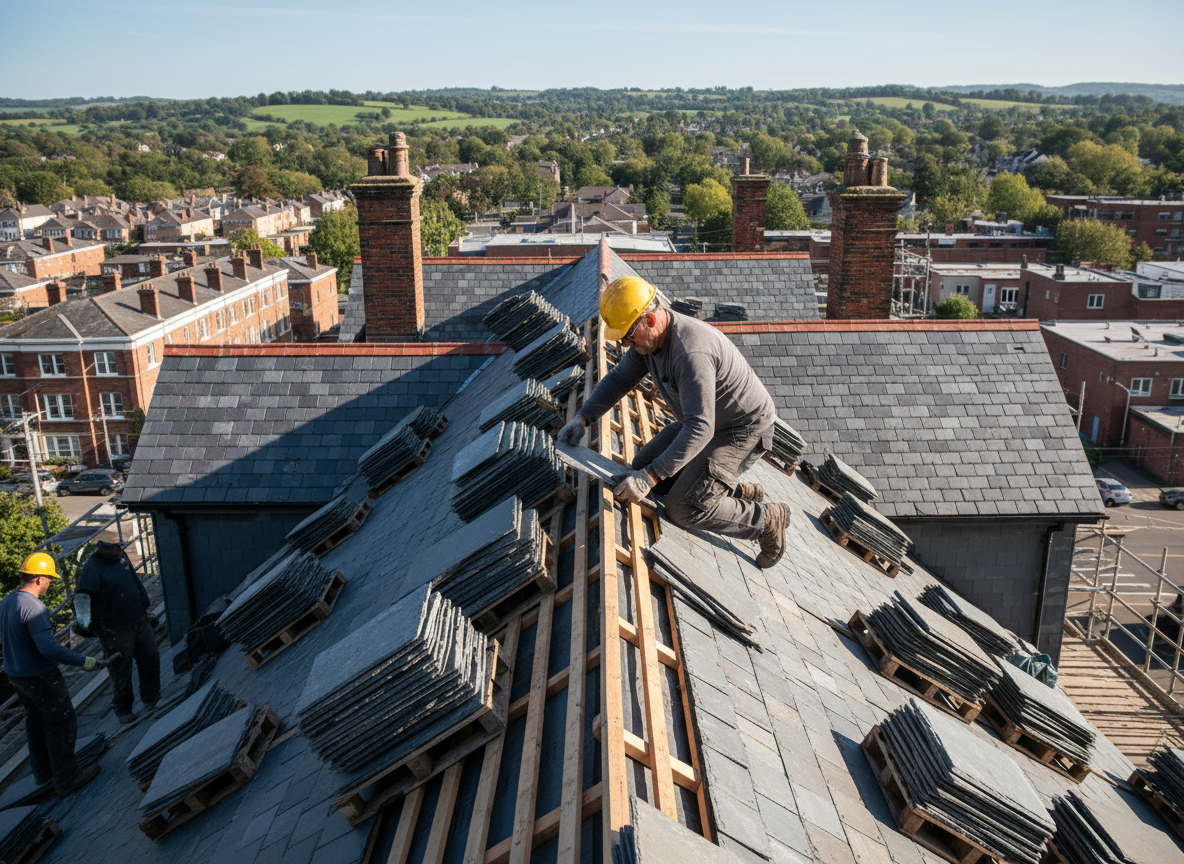
Slate roofing in Lynnwood requires careful attention to the region's frequent heavy rains and mild but damp winters, which can lead to moisture intrusion if underlayment or flashing is not installed precisely. Natural slate tiles vary in thickness and density, and crews must select grades that withstand freeze-thaw cycles common near the Puget Sound. Older homes along Highway 99 and in neighborhoods near Alderwood often have rafter spacing that demands additional support before slate can be added safely.
Installation crews account for the weight of slate, which exceeds many asphalt systems found on 1960s and 1970s homes in Snohomish County. Proper ventilation and ice-and-water shield placement along eaves and valleys become essential during the wet season to prevent rot in sheathing. Edge details around chimneys and skylights receive extra layers of step flashing because wind-driven rain frequently reaches those seams.
Repairs focus on individual cracked or slipped slates without disturbing surrounding tiles, a process that preserves the roof's integrity on steeper pitches common in Lynnwood subdivisions. Matching color and texture from original quarries can be difficult, so technicians keep limited stock of common sizes on hand. Homeowners near Mountlake Terrace and Edmonds borders often request inspections after wind events that dislodge ridge tiles.
Code compliance in Snohomish County includes verifying that existing structures can carry the added dead load before any slate work begins. Crews document existing conditions with photos and measurements so that any required sistering of rafters meets local permitting standards without unnecessary changes to the roofline.
Technician insight
In Lynnwood, the thing that catches most people out with Slate roofing is the extra weight on 1960s tract homes near Highway 99, where many rafters were never built for anything heavier than asphalt and need sistering before tiles go on.
Slate Ridge Repair Near Alderwood
Wind from a winter storm lifted several ridge slates on a two-story home off 44th Avenue West. Inspection showed failed fasteners and minor sheathing moisture along the ridge board. Crews replaced the damaged slates, added new copper ridge flashing, and confirmed ventilation remained clear. The roof has stayed dry through subsequent rains.
How it works
- 1
Site Assessment
Technicians inspect the existing roof structure, measure rafter spacing, and check for prior water damage in Lynnwood homes.
- 2
Material Selection
Appropriate slate thickness and underlayment are chosen based on slope, exposure, and local rainfall patterns.
- 3
Structural Preparation
Rafter reinforcement or sheathing repairs are completed where needed to support slate weight.
- 4
Installation
Slate tiles are laid with correct overlap, copper or stainless fasteners, and detailed flashing at all penetrations.
- 5
Final Inspection
The completed roof is checked for alignment, ventilation function, and weather-tight edges before cleanup.
Pricing
Slate roofing costs vary with home size, roof complexity, and any structural work required; upfront written estimates are provided after inspection.