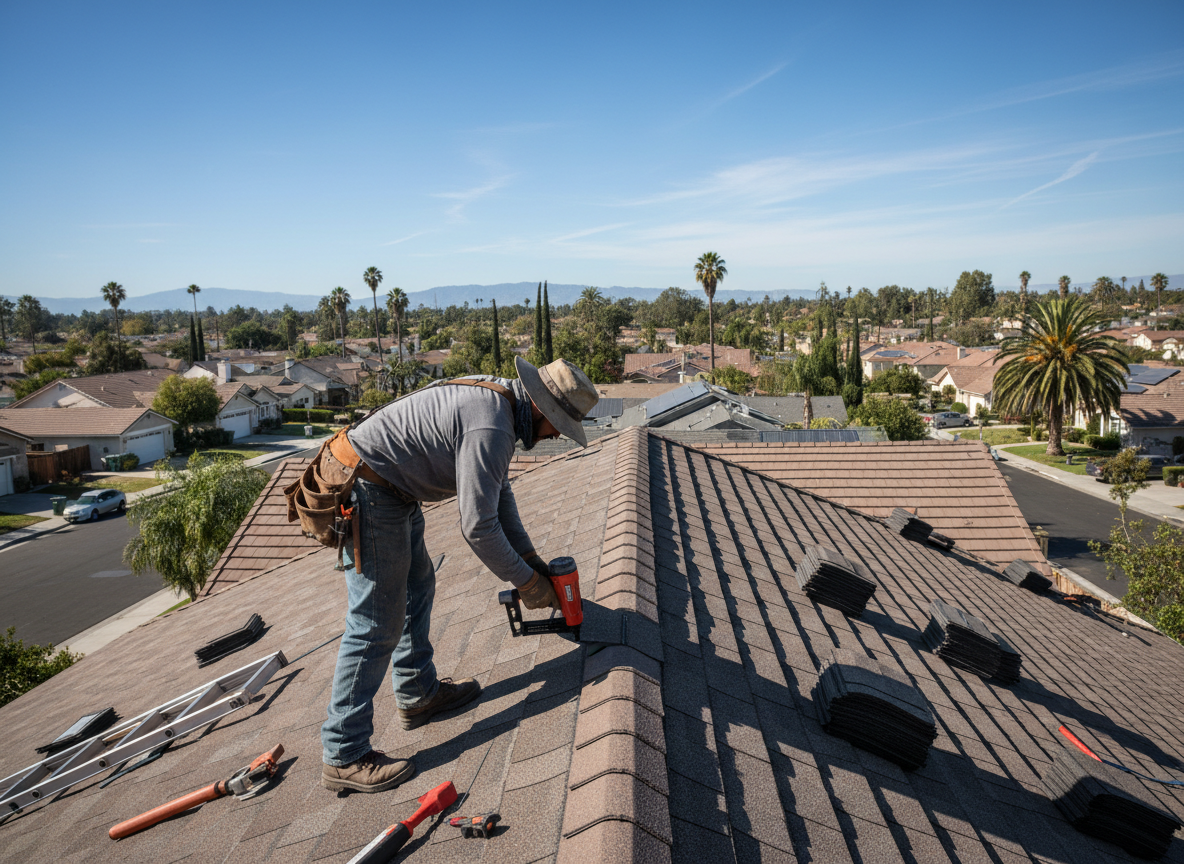
Roofing installers in Lynwood work with asphalt shingles on most single-family homes built between the 1960s and 1990s, where aging decking often needs full replacement before new underlayment goes down. Heavy winter rains common to the area demand ice-and-water shield along eaves and valleys plus proper drip edge to keep water from backing up under the shingles. Crews also watch for moss growth on north-facing slopes, which requires removal and treatment before new material is laid to prevent premature failure.
Edge cases include homes with low-slope additions or attached garages where step flashing must tie into existing siding without creating leak points. Installers check rafter spacing and sheathing condition on site because older Lynwood properties sometimes have 2x4 rafters that need sistering before carrying new loads. Ventilation upgrades are often added during the job to reduce attic moisture that builds up during the long wet season.
Code compliance in Snohomish County requires permits for full replacements and adherence to current wind and snow load standards even though snow is infrequent. Installers verify that ridge vents and intake soffits maintain proper airflow ratios so the new roof does not trap heat or moisture. Homeowners should inspect the finished ridge line and flashing details themselves once the job is complete.
Technician insight
In Lynwood, the thing that catches most people out with roofing installers is how quickly rain can soak older felt underlayment during tear-off. Once the deck gets wet, you have to stop and let it dry or risk trapping moisture that later causes deck rot. Homes near the highway often see faster moss return because of shade from mature trees, so we always treat the north slopes before laying new shingles.
Mid-Century Ranch Roof Replacement
Heavy rain had caused leaks along the north valley of a 1970s ranch in Lynwood. We found rotted decking under two layers of old shingles and inadequate flashing at the chimney. After replacing damaged sheathing and adding ice-and-water shield the full length of the valley, we installed new architectural shingles with proper ridge ventilation. The homeowner reported no further leaks through the next winter.
How it works
- 1
Site Assessment
Measure the roof, check decking condition, and note drainage issues created by Lynwood's frequent rain.
- 2
Material Selection
Choose shingles, underlayment, and ventilation suited to local wet winters and typical home construction.
- 3
Tear-Off and Preparation
Remove old layers, repair or replace damaged sheathing, and install ice-and-water shield at eaves and valleys.
- 4
Installation
Lay new shingles with correct nailing patterns, install flashing at all penetrations, and finish ridge and edge details.
- 5
Final Inspection
Walk the roof with the homeowner to confirm workmanship and verify all debris has been removed from the property.
Pricing
Pricing depends on roof size, pitch, existing layer count, and material choice. Upfront quotes provided after inspection.