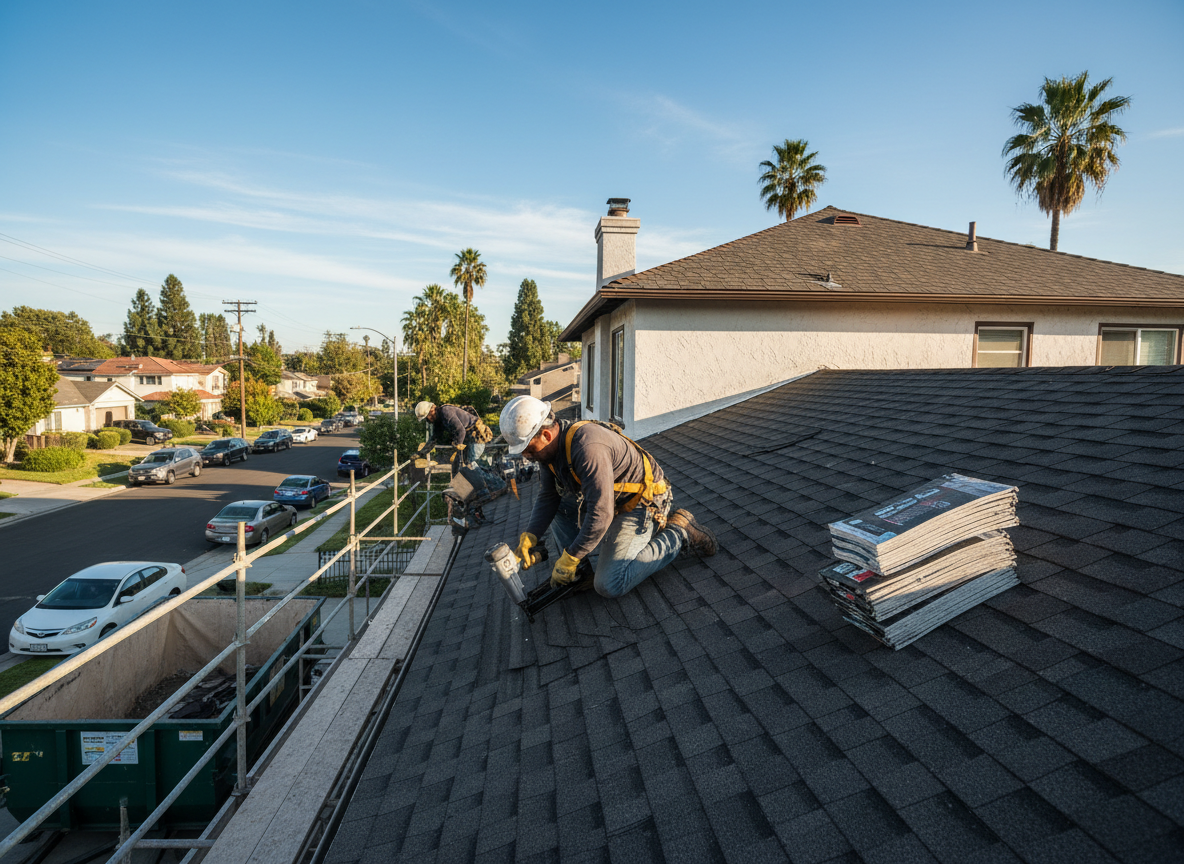
Lynnwood homes along the Highway 99 corridor and in neighborhoods like Alderwood Manor often date from the 1960s through 1980s, with many still carrying original asphalt shingles or cedar shake that have taken decades of Pacific Northwest rain. Frequent winter storms bring heavy wind-driven moisture that finds weak spots at valleys, skylights, and step flashing. Skynvex Apex crews inspect decking for rot caused by repeated saturation and replace underlayment with ice-and-water shield in vulnerable zones to meet current Snohomish County requirements for low-slope transitions.
Moss and algae growth accelerates on north-facing slopes here because of extended shade and constant moisture. Left unchecked, it lifts shingles and shortens roof life by years. During replacement we remove all organic material, treat the deck, and install new shingles rated for high wind uplift. Ventilation is checked and upgraded where needed; many older Lynnwood attics lack adequate intake at the eaves, which leads to ice dam risks even in mild winters.
Permits are required for most re-roofs in Snohomish County. We pull the paperwork, schedule inspections, and ensure ridge venting and drip edge details satisfy the local building department. Homeowners sometimes attempt partial repairs after a leak, but mismatched layers trap moisture and create bigger problems later. Full tear-off to the deck allows proper assessment of sheathing and rafters before new materials go down.
Edge cases include homes with multiple additions where roof planes meet at odd angles. These intersections collect debris and leak first during prolonged November rains. We detail each transition with custom flashing and self-adhered membrane rather than relying on caulk that fails within a few seasons.
Technician insight
In Lynnwood, the thing that catches most people out with Residential Roofing is how quickly north-facing slopes collect moss on pre-1990 homes along the Highway 99 corridor. One missed season of growth lifts shingles and lets water under the underlayment during our long wet winters.
Winter Leak on Split-Level Home
Homeowner reported interior staining after several days of heavy rain. Inspection showed failed step flashing where an addition met the original roof. We removed the affected courses, replaced damaged decking, installed new self-adhered membrane and custom flashing, then matched the existing shingles. No further leaks occurred through the next winter storms.
How it works
- 1
Initial Inspection
We walk the roof and attic, document existing layers, ventilation, and any soft spots in the decking.
- 2
Material and Scope Review
Homeowner receives a written scope listing shingles, underlayment, flashing, and ventilation upgrades suited to Lynnwood exposure.
- 3
Tear-Off and Deck Preparation
All existing roofing is removed, decking is inspected and repaired, and ice-and-water shield is installed at eaves and valleys.
- 4
Installation
New shingles or other specified materials are installed with proper nailing patterns, ridge vent, and step flashing at walls.
- 5
Final Walk-Through
Job site is cleaned, photos are provided, and the homeowner receives the warranty and maintenance guidance.
Pricing
Upfront written quotes based on roof size, layers present, and material choice; no hidden fees for standard residential work.