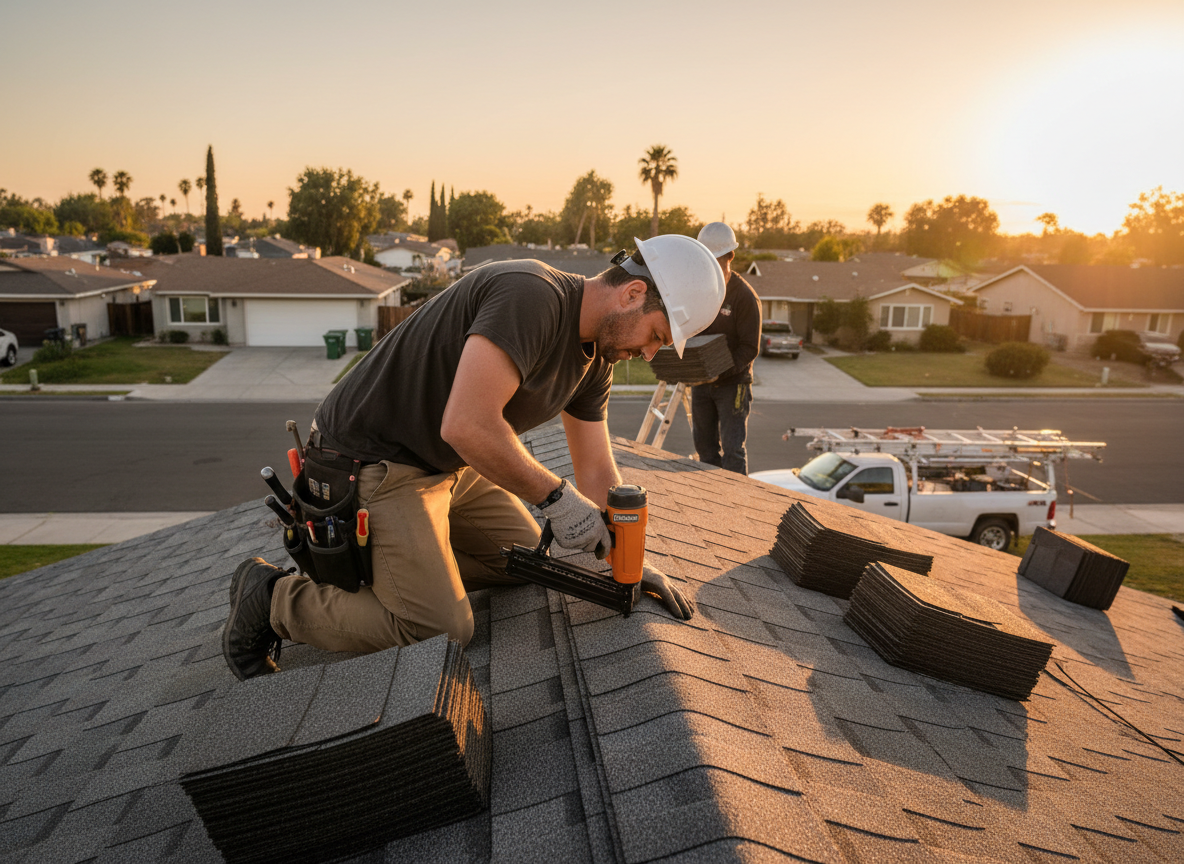
Lynwood sits in Snohomish County where heavy winter rains and occasional high winds off Puget Sound hit roofs hard. Homes built from the 1960s through 1980s around the Alderwood Mall corridor and along 44th Avenue often carry aging asphalt shingles or cedar shakes that absorb moisture and rot from below. Professional roofing services here start with a full deck inspection because skipping that step lets hidden plywood damage turn a simple re-roof into a structural repair once the old layers come off.
Wind-driven rain finds every seam around skylights, plumbing vents, and step flashing on split-level houses common in the area. We use ice-and-water shield extended well past the eaves and valleys, then layer synthetic underlayment rated for the region’s frequent wet cycles. Proper ventilation through ridge and soffit vents keeps attic moisture from pushing back up into the new shingles, a detail that matters more in Lynwood than in drier eastern counties.
Code requirements in Snohomish County call for specific nail patterns and drip-edge installation on all re-roofs. Skipping the drip edge on the gable ends lets water wick behind fascia boards during the long November rains, a problem we see repeatedly on 1970s ranch homes near 196th Street. Matching shingle color and profile to existing homes in established neighborhoods also keeps the work looking intentional rather than patched.
Terrain around the Hwy 99 corridor includes gentle slopes that still create drainage issues at the roof-wall intersections on daylight basements. We always check these transitions during the initial walk and document them with photos so homeowners see exactly where water is likely to collect.
Technician insight
In Lynwood, the thing that catches most people out with professional roofing services is the hidden rot under cedar shakes on 1970s homes near Alderwood. Once we start the tear-off, water damage often runs farther than the visible stains in the attic suggest, especially on the north-facing slopes that stay wet longest.
Alderwood Split-Level Re-Roof
Homeowner noticed ceiling stains after a November storm. We found saturated sheathing under the old cedar shakes on the north slope. Deck sections were replaced, ice-and-water shield extended higher, and new architectural shingles installed with improved ridge ventilation. No further leaks reported through the next winter.
How it works
- 1
On-Site Assessment
We walk the entire roof, check attic ventilation, and note any soft spots or flashing failures specific to Lynwood homes.
- 2
Detailed Scope and Quote
Written scope lists every material and step so there are no surprises once work begins.
- 3
Tear-Off and Deck Repair
Old roofing is removed to the deck; any damaged plywood is replaced before underlayment goes down.
- 4
Installation and Final Walk
New roof is installed with proper flashing and ventilation, followed by a ground-level review with the homeowner.
Pricing
Upfront quotes after on-site inspection; price depends on roof size, layers, and any deck repairs found.