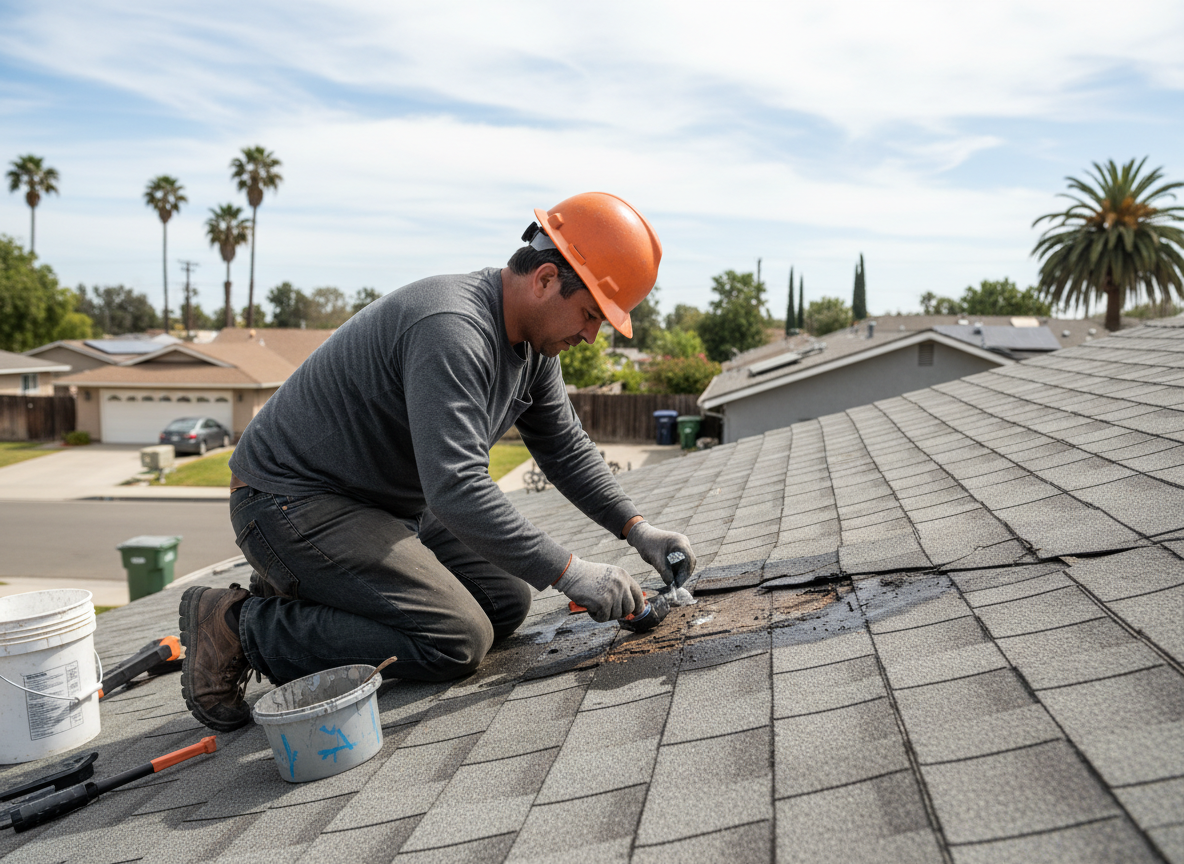
Lynnwood’s frequent winter rains and wind-driven moisture push water under shingles on homes built in the 1970s and 1980s, especially where valleys meet the roof deck. We locate the entry point by lifting suspect courses rather than relying on interior stains, then replace damaged underlayment and step flashing without removing the entire slope. Older split-levels common along Highway 99 often have multiple layers that trap moisture, so we check for rot at the plywood joints before any patch is installed.
North-facing slopes in neighborhoods like Alderwood Manor and Martha Lake collect moss that holds water against the shingles long after the rain stops. Removing the growth and treating the area prevents the same leak from returning within a season. We also inspect the step flashing around chimneys and skylights, because wind in the Snohomish County corridor can force water uphill under poorly overlapped metal.
When a leak has already reached the ceiling, we document the extent with photos before any interior work begins. This protects homeowners from surprise costs if insulation or drywall must be replaced after the roof is sealed. All repairs use manufacturer-approved flashing and ice-and-water membrane at the penetration points to match the existing roof system.
Technician insight
In Lynnwood, the thing that catches most people out with leaky roof fix is the second layer of shingles on 1970s split-levels along 44th Avenue. The extra weight traps water at the valley edges during our long drizzle periods, so a quick shingle patch fails within months unless the underlayment is pulled back and the deck is checked.
Wind-Driven Leak on North Slope
A homeowner in the Alderwood Manor neighborhood noticed water stains above a bedroom window after a week of steady rain. We found the step flashing around a bathroom vent had lifted where wind had driven water uphill under the second shingle layer. We removed the affected course, replaced the underlayment and flashing with ice-and-water membrane, and re-laid the original shingles. The ceiling dried without further interior work.
How it works
- 1
Site Inspection
We walk the roof and attic to trace the leak path using the actual water stains and roof slope.
- 2
Source Identification
Damaged underlayment, failed flashing, or moss-trapped seams are marked and photographed.
- 3
Targeted Repair
We replace only the affected section of underlayment and flashing while preserving sound shingles.
- 4
Final Water Test
A controlled hose test confirms the repair holds before we leave the property.
Pricing
Upfront quotes after on-site inspection; cost depends on roof pitch, number of layers, and whether interior drywall repair is needed.