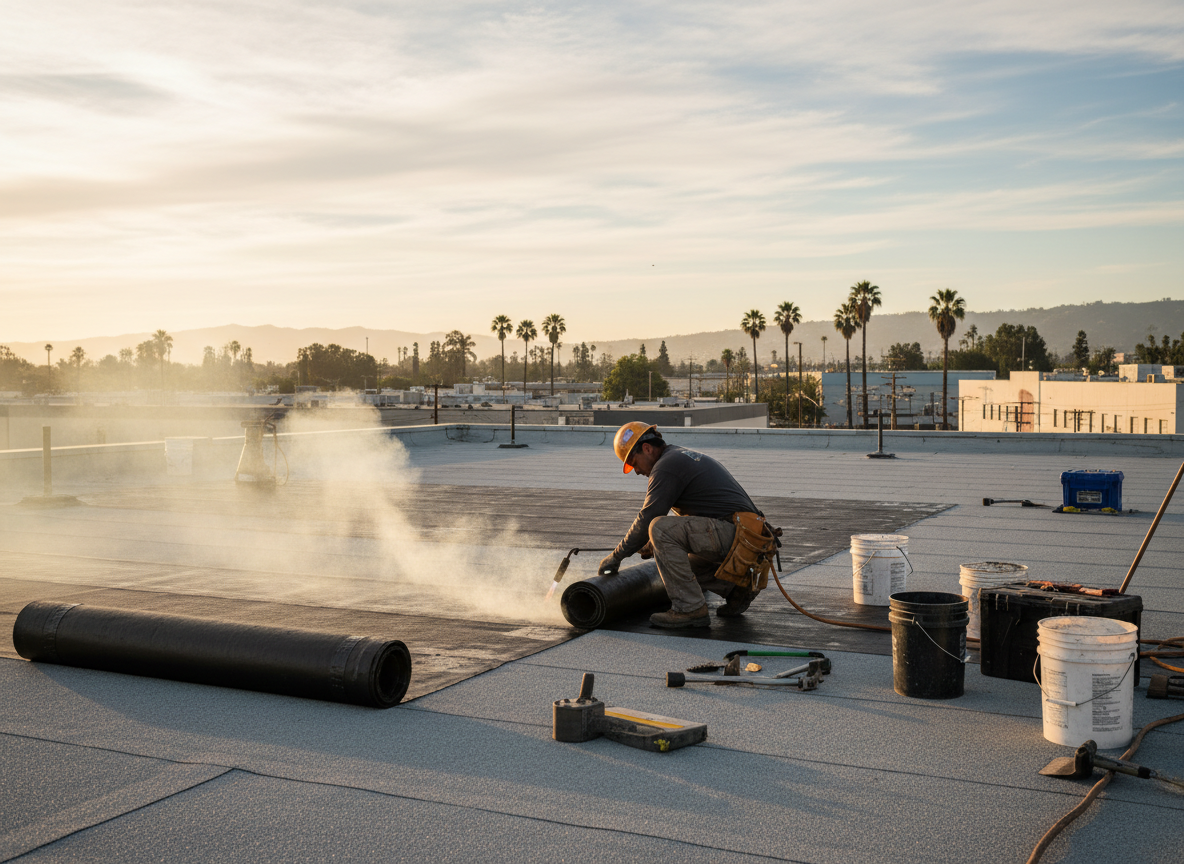
Flat roofs in Lynnwood face constant challenges from the region's heavy winter rainfall and occasional freeze-thaw cycles. Ponding water often collects near HVAC units and drains on buildings constructed in the 1970s through 1990s, leading to membrane deterioration at seams and flashings. Skynvex Apex technicians inspect for these patterns on EPDM, TPO, and modified bitumen systems common in the area before any repair begins.
Repairs frequently involve addressing edge details where parapet walls meet the roof deck, especially on structures near Highway 99 and Alderwood Mall. Older flat roofs in Lynnwood can have underlying plywood decking that has softened from repeated moisture exposure, requiring targeted replacement rather than simple patching. Crews work from the address at 19832 Hwy 99 to reach jobs in adjacent areas like Martha Lake and Lake Stickney quickly.
Code compliance in Snohomish County requires proper slope restoration and compatible materials when sections are replaced. Skynvex Apex avoids mixing incompatible membranes that can accelerate failure in the damp local climate. Every repair includes checking for blocked scuppers and ensuring positive drainage to reduce future water retention on the surface.
Technician insight
In Lynwood the thing that catches most people out with flat roof repair is how quickly ponding near HVAC curbs turns into deck rot on 1980s buildings. Homeowners often focus on the visible leak inside but miss that the real fix requires addressing slope and seam adhesion in our constant winter rain, otherwise the same spot fails again within two seasons.
Martha Lake commercial building leak
Water was entering through a corner seam on a flat roof installed in the late 1980s. Inspection revealed ponding behind an HVAC unit and softened plywood decking. The crew replaced the affected deck section, installed new TPO membrane with reinforced flashing, and adjusted the drain elevation. No further interior leaks occurred after the first heavy rain.
How it works
- 1
Site Assessment
Technician examines the entire roof surface, checks for ponding, seam separation, and deck condition while documenting drainage paths.
- 2
Material Matching
Existing membrane type is identified so new sections integrate without creating weak points that fail under Lynnwood rain loads.
- 3
Targeted Repair
Damaged areas are cleaned, old material removed, and new membrane or flashing installed with heat or adhesive per manufacturer specs.
- 4
Drainage Verification
Water flow is tested across the repaired section to confirm no new low spots remain before leaving the site.
Pricing
Cost depends on roof size, extent of membrane damage, and whether decking replacement is needed; upfront quotes provided after inspection.