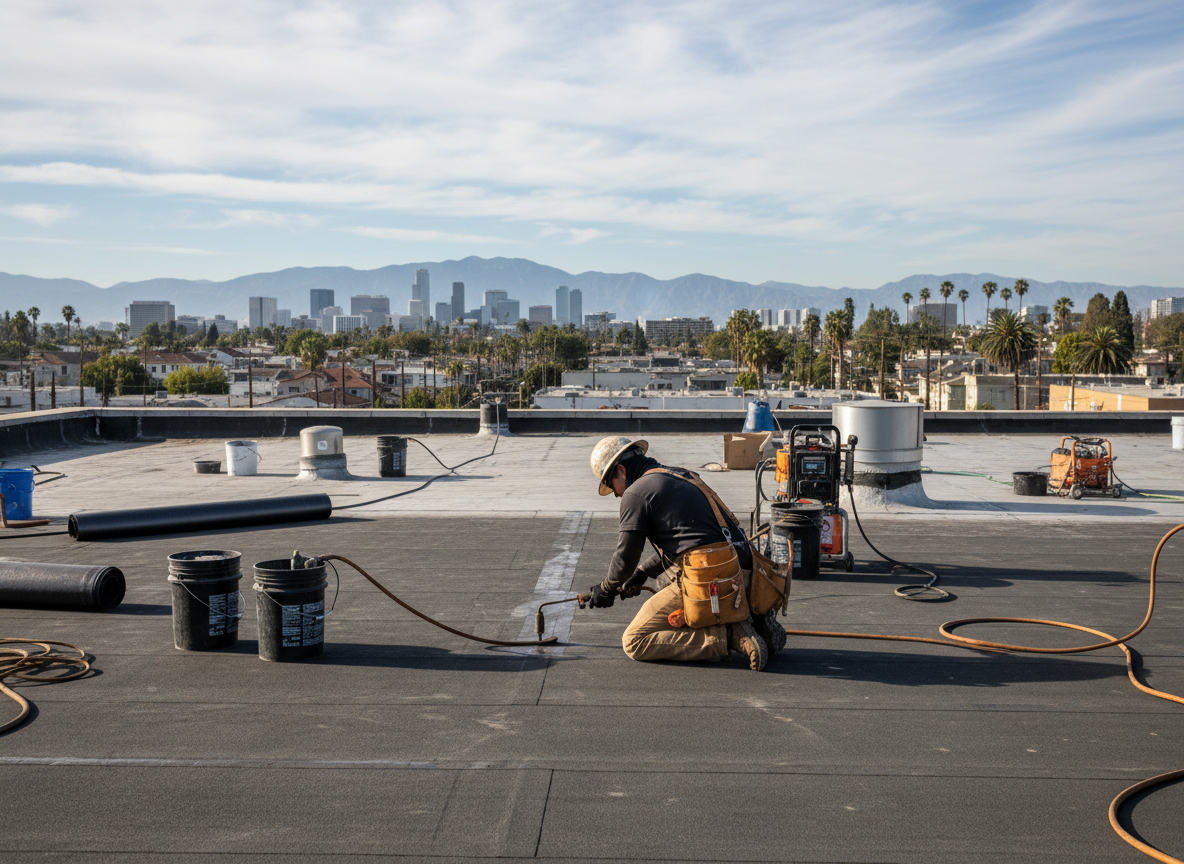
Lynnwood commercial properties often feature low-slope or flat roofs on retail strips, warehouses, and office buildings along Highway 99 and 44th Avenue. These roofs face prolonged winter rainfall that can pond if drains clog or slopes are inadequate, leading to membrane failures over time. Proper edge detailing around HVAC curbs and skylights becomes critical because wind-driven rain finds every seam in older built-up systems.
We evaluate existing substrates for rot or insulation saturation before recommending TPO, EPDM, or modified bitumen overlays. In Snohomish County, permit requirements for commercial re-roofs include updated drainage calculations, so we coordinate with local inspectors early. Heat-welded seams and reinforced flashings hold up better here than mechanically fastened options that can loosen during heavy gusts off the Puget Sound.
Regular inspections after the fall leaf drop catch debris buildup in scuppers before it causes interior leaks. Commercial tenants in Lynnwood notice water intrusion first through ceiling tiles near loading docks, where roof-to-wall transitions meet the most stress from delivery traffic vibration.
Technician insight
In Lynwood, the thing that catches most people out with Commercial Roofing is how quickly flat roofs collect standing water once the scuppers fill with fir needles and moss; one clogged drain on a 20-year-old building can saturate the insulation across an entire bay before anyone notices.
Retail Strip Leak Near 44th
Water was entering a tenant space after heavy November rain. We found a failed seam at a roof-to-wall transition where the original flashing had pulled away from vibration. We cut out the saturated insulation, installed new tapered crickets, and heat-welded a reinforced TPO patch. The leak stopped and the space stayed dry through the rest of the winter.
How it works
- 1
Site Assessment
Walk the roof and interior spaces to map leaks, check drainage, and note HVAC penetrations.
- 2
Material Selection
Match membrane type and insulation R-value to the building's use and existing slope.
- 3
Installation
Remove damaged sections, install new membrane with heat-welded or adhered seams, and tie in all flashings.
- 4
Final Inspection
Test drains, document seams, and provide maintenance guidance for the property manager.
Pricing
Upfront quotes based on square footage, chosen membrane, and any structural repairs discovered during assessment.