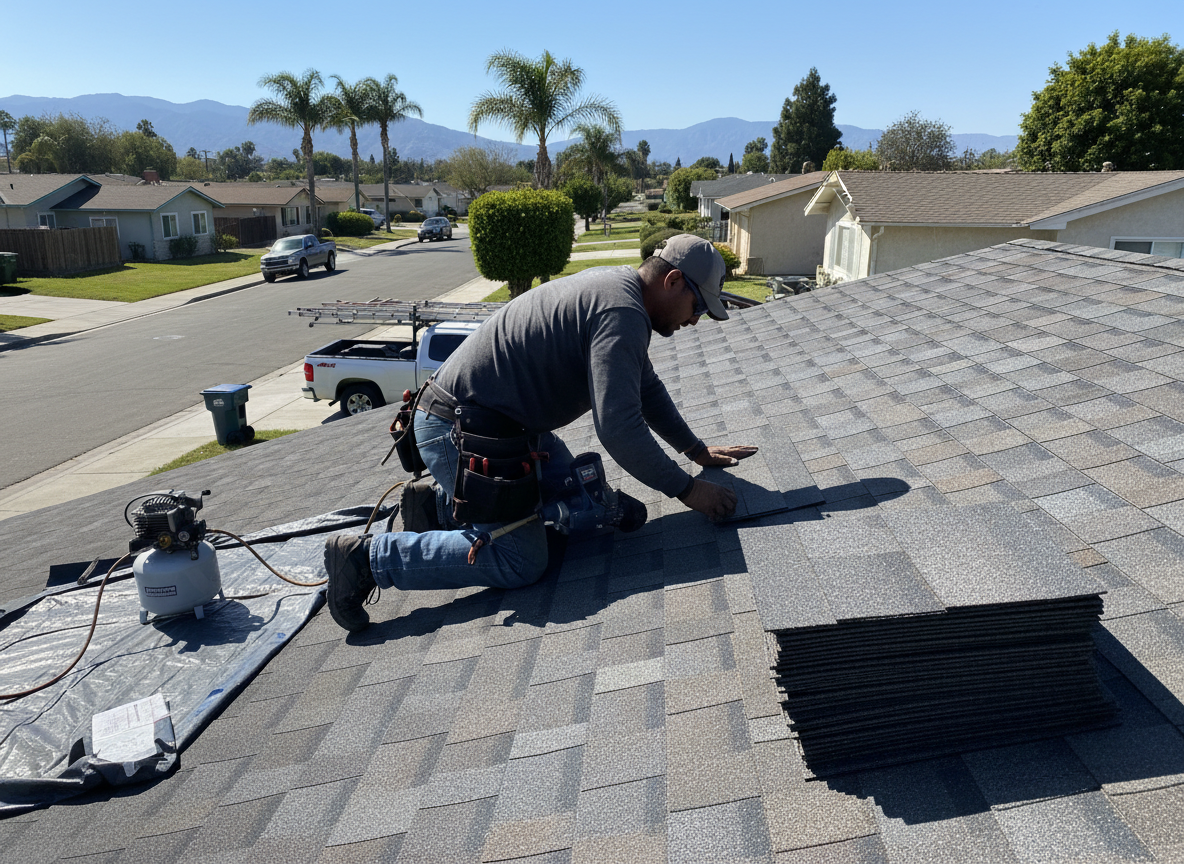
Asphalt shingles remain the most common choice for homes in Lynnwood due to their balance of cost and performance in frequent rain. Proper underlayment and ridge venting become critical here because trapped moisture from the Puget Sound climate shortens shingle life on older roofs common in neighborhoods near Highway 99. Homeowners often overlook how south-facing slopes lose granules faster, exposing the mat and inviting leaks at seams.
Edge cases arise with the mix of split-level and ranch-style houses built from the 1960s onward in Lynnwood. These structures frequently have low-pitch sections where standard three-tab shingles hold water longer than architectural shingles with deeper profiles. Flashing around skylights and plumbing vents must be stepped correctly to prevent ice dams during rare freezes, a detail that separates lasting work from callbacks.
Local building practices require asphalt shingle roofing to meet current wind-uplift standards even on re-roofs. We inspect decking for rot caused by previous leaks before any new layer goes down, because skipping this step in the damp soil conditions around Lynnwood leads to sagging and interior damage years later.
Seasonal Considerations
Heavy fall rains in the Lynnwood area test new asphalt shingle roofing immediately. Scheduling work between wet periods allows proper drying of the deck and reduces the chance of trapped moisture under the new layer.
Technician insight
In Lynwood, the thing that catches most people out with Asphalt shingle roofing is how the constant Pacific Northwest moisture accelerates granule loss on south-facing slopes when ridge venting is inadequate, turning a simple re-roof into repeated leak repairs within a few seasons.
Shingle Section Replacement
A Lynnwood homeowner reported interior ceiling stains after several days of rain. Inspection showed missing shingles and failed flashing near a bathroom vent on a low-pitch section. We removed the damaged area, replaced the underlayment and flashing, then installed matching asphalt shingles. The roof has remained dry through subsequent wet weather.
How it works
- 1
Site Assessment
We examine the existing roof, deck condition, and ventilation in Lynnwood homes to identify issues before any work begins.
- 2
Material Selection
Homeowners choose from architectural or three-tab shingles suited to local rainfall and wind exposure.
- 3
Installation
Old shingles are removed when needed, underlayment and ice-and-water shield are applied, then new shingles are installed with correct nailing patterns.
- 4
Final Walkthrough
We check flashing, ridges, and drainage before leaving the job site.
Pricing
Pricing varies by roof size, pitch, number of layers, and ventilation needs. Upfront quotes follow an on-site visit.