2026-10-24 ·
How To Spot Moss Damage On Lynwood Roofs
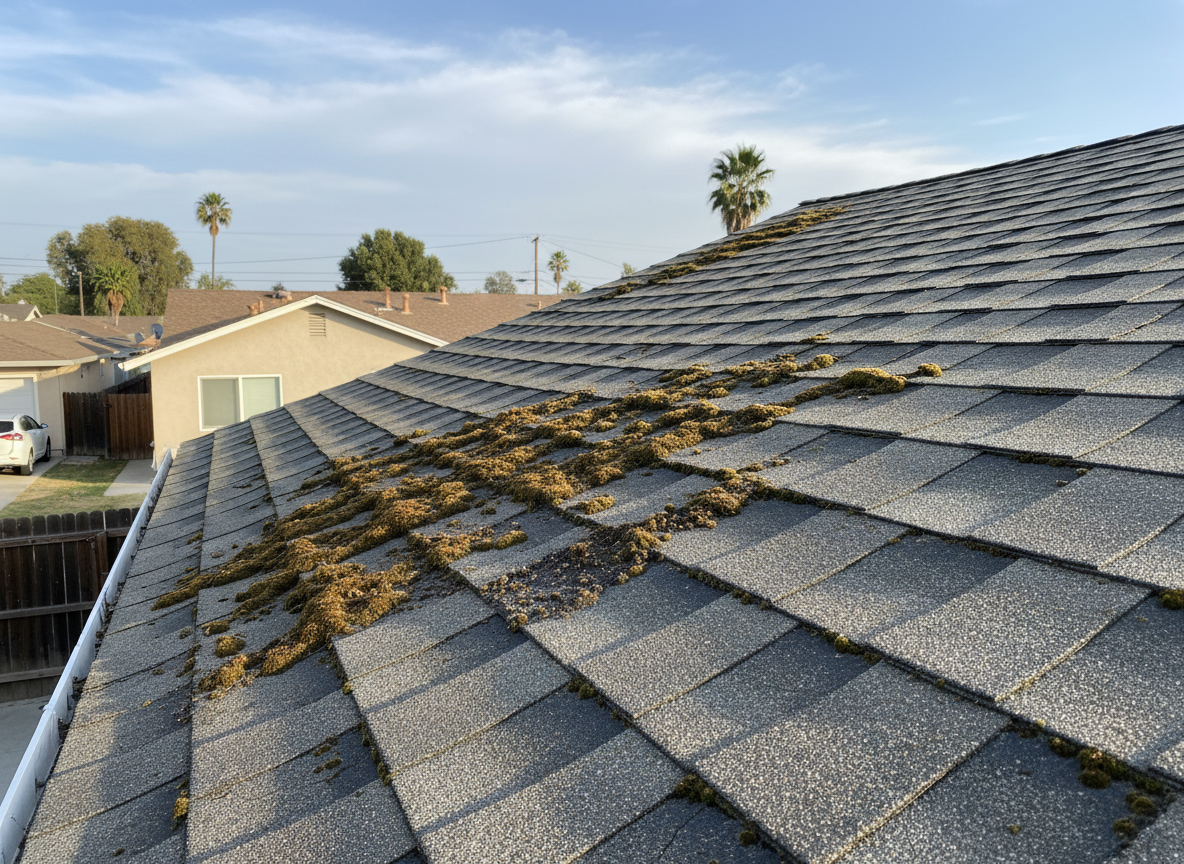
Moss damage on Lynwood roofs shows up first as dark green or black patches that hold water against asphalt shingles, causing granule loss and felt-layer decay within 3–5 years in Snohomish County's frequent rain. Homeowners notice this most on north-facing slopes and under tree cover common in neighborhoods near 19832 Hwy 99.
Visual Signs of Moss Damage
Walk the perimeter at ground level during daylight and look for thick, velvety mats that spread from ridge to eave on asphalt shingle roofs. In Lynwood, these mats often appear after the first fall rains and stay green through winter because average temperatures rarely drop below freezing long enough to kill the growth. Check for raised shingle edges where moss roots lift the tabs, exposing the underlayment. Granule shedding appears as dark streaks in gutters or on driveways below the roofline. Compare the roof color to neighboring homes in the same block; consistent dark patches on one roof while others stay lighter usually indicate active moss rather than just shade. Document the size of each patch in square feet so you can track spread over subsequent seasons.
How Moss Affects Asphalt Shingles in Wet Climate
Lynwood's 40-plus inches of annual rainfall keeps moss hydrated, allowing it to retain moisture against the shingle surface for days after storms pass. This constant dampness accelerates oxidation of the asphalt binder and loosens the ceramic granules that protect the mat from UV. Over 8–12 years the felt layer beneath begins to rot, creating soft spots that sag under foot traffic during inspections. In neighborhoods with mature evergreens, shade prevents the roof from drying between rains, so damage concentrates on the lower third of each slope. Homeowners also see increased leaf debris trapped by the moss, which further blocks drainage and promotes ice dams during rare cold snaps. The result is shortened service life compared to roofs in drier parts of the county that receive full sun exposure.
When to Schedule a Roof Inspection
Schedule a professional roof inspection services visit once moss covers more than 10 percent of any single slope or when you observe granule accumulation in gutters after every storm. Lynwood homes built between 1980 and 2000 often have 20- to 25-year shingles that are now reaching the end of their expected lifespan, making early moss intervention critical. An inspector will probe soft spots, check flashing integrity around chimneys, and measure remaining granule coverage with a standard gauge. Early detection allows targeted treatment before the decking requires replacement. Link the inspection findings to your maintenance records so future owners see documented roof condition.
Preventing Further Issues After Spotting Moss
After confirming moss presence, schedule gentle removal rather than pressure washing, which can strip remaining granules from asphalt shingles. Pair removal with gutter cleaning to restore flow and reduce standing water that feeds new growth. Homeowners in adjacent areas such as Edmonds and Mountlake Terrace follow the same seasonal schedule because the marine climate is identical. Review the article Cleaning Gutters Before Lynwood Fall Storms for timing recommendations that match local rainfall patterns. Track treated areas for regrowth the following spring and consider zinc or copper strips along the ridge if moss returns within two seasons. For roofs nearing replacement age, compare current condition against the article What Asphalt Shingle Replacement Costs In Snohomish County to plan budget timelines.